2025
How to Create a Client Gifting Program: Step-by-Step Guide
By aditya
From Random Acts to Strategic System
You know client gifting works. You have seen how a thoughtful gift strengthens relationships, generates goodwill, and keeps you top of mind. But somehow, despite good intentions, your gifting remains sporadic and inconsistent.
Some clients receive beautiful gifts at perfect moments. Others get forgotten entirely. Important occasions slip by unrecognized. You scramble at the last minute, grabbing whatever is convenient rather than what is meaningful.
This is not a character flaw. It is a systems problem.
The business professionals who consistently excel at client appreciation are not more thoughtful or caring than you. They simply have systems that ensure thoughtful actions happen reliably, regardless of how busy life gets.
This guide provides a complete framework for building a client gifting program that runs systematically. By the end, you will have a clear roadmap for creating a program that strengthens every important relationship in your business without requiring constant attention and effort.
Why Systematic Gifting Beats Ad Hoc Gifting
Before diving into the how, let us establish why systematic approaches dramatically outperform spontaneous ones.
Consistency builds trust. When clients receive regular appreciation, they develop expectations and confidence in the relationship. Sporadic gifting feels random and unreliable, like a friend who only calls when they need something.
No one falls through the cracks. Without a system, the clients who get attention are often the ones who happen to be top of mind at gifting moments. Your most loyal, low-maintenance clients may receive the least recognition simply because they do not demand it.
Quality remains high. Rushed, last-minute gifts are rarely the best choices. Systematic programs give you time to select thoughtful, appropriate items rather than grabbing whatever is available.
Budgeting becomes predictable. When gifting happens randomly, costs are unpredictable and often higher than necessary. Systematic programs allow for planned budgets and bulk purchasing efficiencies.
Execution becomes effortless. Once systems are established, gifting happens automatically. You maintain strong relationships without constant decision-making and logistics management.
Step 1: Define Your Gifting Objectives
Every effective program starts with clarity about what you are trying to accomplish. Different objectives lead to different program designs.
Client Retention
If your primary goal is keeping existing clients engaged and loyal, your program should emphasize consistent touches throughout the relationship lifecycle. Regular appreciation reminds clients why they chose you and reinforces their decision to stay.
For retention-focused programs, the Automated Gift Campaign provides the systematic multi-touch approach that keeps you present in clients’ minds year-round.
Referral Generation
If generating referrals is your priority, focus on creating memorable moments that clients want to share. Exceptional gifts become conversation starters, naturally prompting discussions about the business professional who provided them.
The Referral Program adds a structured approach for recognizing and encouraging referral behavior.
Relationship Deepening
If you want to strengthen connections with key clients, emphasize personalization and timing around meaningful moments. Birthday recognition, milestone celebrations, and personalized selections demonstrate genuine attention to individual clients.
New Client Onboarding
If setting the right tone with new clients is your focus, invest in impressive welcome gifts that establish expectations for the relationship. First impressions shape how clients perceive everything that follows.
Competitive Differentiation
If standing out from competitors is the goal, select gifts that are unexpected and memorable. Generic items that every competitor gives do nothing for differentiation. Unique, high-quality gifts create lasting impressions.
Most programs serve multiple objectives simultaneously. Identify your primary and secondary goals to guide decisions throughout the program design process.
Step 2: Identify Your Gift Recipients
Not everyone in your business ecosystem requires the same gifting approach. Segment your recipients into categories that will receive different levels of attention and investment.
Tier 1: High-Value Clients
These are your most important relationships. They generate significant revenue, have been with you longest, or have the highest potential for future growth. This tier deserves premium gifts and frequent touchpoints.
Identify specific criteria that define this tier for your business. Revenue thresholds, relationship length, referral history, or strategic importance might all factor into the definition.
Tier 2: Core Clients
The solid foundation of your business. These clients are valuable and deserve appreciation, but may not warrant the same investment as your top tier. Thoughtful annual gifts plus milestone recognition typically serve this segment well.
Tier 3: Newer or Smaller Clients
Relationships with potential but not yet proven. Appropriate recognition without over-investment allows you to build relationships while managing costs. As these clients demonstrate loyalty and growth, they can move to higher tiers.
Tier 4: Centers of Influence
Referral sources, strategic partners, and other professionals who send business your way. These relationships often deserve premium treatment because their value multiplies through the clients they refer.
Special Categories
Depending on your business, you might have additional categories like prospects you are cultivating, vendors who provide exceptional service, or former clients you want to re-engage.
Create a master list of recipients organized by tier. Include contact information, key dates (birthdays, anniversaries, etc.), and any notes about preferences or relevant personal details.
Step 3: Establish Your Budget
Gifting programs require investment, but the returns typically far exceed the costs when programs are well-designed.
Calculate Based on Client Value
One approach ties gifting budget to client value. If a client generates $10,000 in annual revenue, investing 1-2% ($100-200) in appreciation is reasonable and likely to generate positive returns through retention and referrals.
Calculate Based on Tier
Alternatively, establish fixed budgets by tier:
- Tier 1: $150-300 per client annually
- Tier 2: $75-150 per client annually
- Tier 3: $25-75 per client annually
- Centers of Influence: $100-250 per contact annually
These ranges vary significantly by industry and business model. Adjust based on your specific economics and competitive landscape.
Factor in Bulk Efficiencies
Purchasing gifts in quantity typically reduces per-unit costs significantly. Programs like Stock Gifts On-Hand leverage bulk purchasing to reduce costs while maintaining quality.
The Platinum Partner Program provides additional savings for businesses committed to ongoing gifting, including earning free products for personal use with continued orders.
Consider Tax Treatment
As discussed in our guide to tax-deductible client gifts, properly branded items may qualify as advertising expenses rather than limited gift deductions. This favorable tax treatment effectively reduces your after-tax cost by your marginal tax rate.
Always consult your tax professional, but factor potential tax benefits into your budget calculations.
Start Conservatively
If budget constraints are real, start with a smaller program focused on your highest-value relationships. A well-executed program for 20 top clients is better than a poorly executed program for 200. You can expand as you validate results and refine your approach.
Step 4: Select Your Gifts
Gift selection is where many programs go wrong. The temptation to choose cheap, generic items undermines the entire purpose of gifting.
Quality Over Quantity
A single high-quality gift creates more impact than multiple cheap items. Clients perceive quality, and that perception reflects on you. If budget constraints force a choice, give fewer clients better gifts rather than more clients forgettable ones.
Durability Creates Longevity
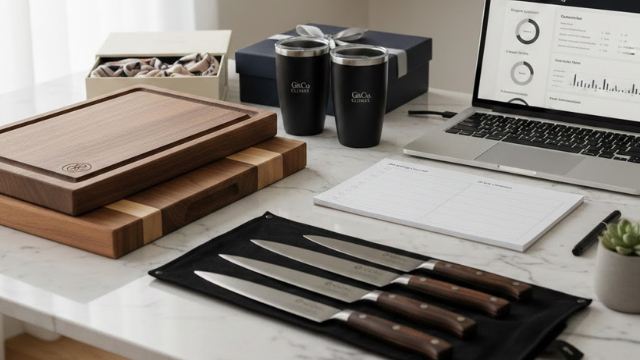
Consumable gifts disappear. Durable gifts continue working for you indefinitely. Every time a client uses a quality knife or cutting board, they think of you. That ongoing presence is impossible to achieve with items that are used once and forgotten.
Cutco products exemplify this principle with their Forever Guarantee. These gifts will literally last forever, providing unlimited impressions over time.
Practicality Ensures Usage
Decorative items often end up in closets or donation piles. Practical items get used regularly, creating consistent touchpoints with your brand. Kitchen items are particularly effective because they are used daily in the heart of the home.
Consider these proven options:
- Premium knives for everyday kitchen use
- Handcrafted cutting boards that display beautifully on counters
- Insulated drinkware that travels everywhere
- Wine accessories for clients who entertain
Match Gifts to Tiers
Your gift selection should align with your tier structure:
Tier 1 gifts should feel premium and substantial. Multi-piece sets, larger cutting boards, or high-end knife collections make appropriate choices.
Tier 2 gifts should feel thoughtful and quality without being extravagant. Single premium knives, mid-range cutting boards, or quality drinkware work well.
Tier 3 gifts can be simpler but should still feel intentional. Items like the Spatula Spreader or single tumblers provide quality at accessible price points.
Consider Personalization Options
Personalization dramatically increases gift impact. At minimum, engrave your company information for branding. Better yet, include the client’s name alongside your branding to create something truly personal.
Items with good engraving surfaces include knife handles, cutting board surfaces, tumbler bodies, and wine box lids.
Step 5: Determine Your Gifting Calendar
When you give matters as much as what you give. Establish a calendar of gifting occasions that will drive your program.
Universal Occasions
These apply to most or all clients:
New client welcome — Immediately upon beginning the relationship Annual appreciation — Your chosen time of year for general appreciation Client anniversary — Marking the anniversary of when they became a client Holiday recognition — If you choose to participate in holiday gifting
Individual Occasions
These are specific to each client:
Birthdays — If you track them Personal milestones — Weddings, births, graduations, retirements Business milestones — Promotions, company anniversaries, achievements Transaction completions — Closing a deal, completing a project, finishing a purchase
Triggered Occasions
These occur based on client actions:
Referral recognition — When a client sends business your way Loyalty milestones — After specific numbers of transactions or years of relationship Service recovery — Following resolution of problems or complaints
Strategic Timing Considerations
Avoid December for your primary gifting if possible. The holiday season is cluttered with gifts from every vendor and business relationship. Your thoughtful gift gets lost in the noise.
Consider timing your annual appreciation for unexpected moments:
- Spring (March/April) after tax season stress
- Summer (June/July) when business often slows
- Fall (September/October) as the year’s final push begins
The element of surprise increases impact. Gifts that arrive when unexpected create stronger emotional responses than those that arrive when everyone is giving gifts.
Step 6: Build Your Logistics System
With objectives, recipients, budget, gifts, and timing defined, you need systems to execute consistently.
Option 1: Stock and Deliver Personally
The Stock Gifts On-Hand program lets you maintain inventory of pre-branded gifts ready for immediate use.
Advantages:
- Personal delivery creates strongest impression
- Immediate availability for spontaneous gifting
- Complete control over presentation
Considerations:
- Requires storage space
- Demands personal time for delivery
- Better suited for local relationships
Option 2: Drop Ship Directly
The Drop Ship Gifts program handles fulfillment on your behalf.
Advantages:
- No inventory to manage
- Scales easily to any number of recipients
- Works for geographically dispersed clients
- Custom messaging included with each gift
Considerations:
- Less personal than hand delivery
- Longer lead times for customization
- Shipping costs factor into budget
Option 3: Fully Automated Campaigns
The Automated Gift Campaign provides complete hands-off execution.
Advantages:
- Set it and forget it operation
- Multiple touches throughout the year
- Includes handwritten cards and strategic timing
- No ongoing management required
Considerations:
- Higher commitment level
- Less flexibility for individual customization
- Best for established, stable client lists
Option 4: Hybrid Approach
Many businesses combine approaches:
- Stock on hand for in-person client meetings and spontaneous occasions
- Drop ship for geographically distant clients and scheduled occasions
- Automated campaigns for systematic year-round touches
This flexibility allows you to optimize for different situations while maintaining consistent appreciation across your client base.
Step 7: Create Your Gift Communication
The message accompanying your gift matters as much as the gift itself. Thoughtful communication amplifies impact.
Written Notes
Whenever possible, include a handwritten note. In an era of digital communication, handwriting feels personal and meaningful. Even a few sentences of genuine appreciation make a significant impression.
If handwriting at scale is impractical, use high-quality printed notes with personal salutations and signatures.
Message Framework
Effective gift messages typically include:
- Genuine expression of appreciation
- Specific acknowledgment of the relationship or occasion
- Brief mention of the gift’s significance or quality
- Warm closing without business solicitation
Example for a new client:
“Welcome to [Company]. We are honored you chose to work with us and excited about our partnership ahead. Please accept this [gift] as a small token of our appreciation. It comes with a Forever Guarantee—just like our commitment to your success.”
Example for a referral thank you:
“Your referral of [Name] means more than you know. Trust like this is the foundation of our business, and we do not take it for granted. This [gift] is a small expression of very large gratitude.”
Gift Letters
For certain products, explanatory letters enhance the gift experience. The Gift Letters resource provides templates that explain the value, quality, and proper use of specific items.
These letters help clients appreciate what makes their gift special and ensure they get maximum value from it.
Step 8: Track and Document
Systematic programs require systematic tracking.
Client Records
Maintain a database or spreadsheet tracking:
- Client name and tier
- Contact and shipping information
- Key dates (birthday, anniversary, etc.)
- Gifts given (dates, items, occasions)
- Notes about preferences or restrictions
- Referrals received from this client
Program Metrics
Track overall program performance:
- Total gifts sent by period
- Spending by tier and overall
- Retention rates over time
- Referral volume and sources
- Client feedback received
Tax Documentation
Keep records supporting the business purpose of your gifting:
- Invoices and receipts
- Photos of branded items
- Business purpose notes
- Recipient lists
Proper documentation supports both tax deductions and program optimization.
Step 9: Launch and Execute
With all elements in place, you are ready to launch.
Start with a Pilot
Consider launching with your Tier 1 clients first. This smaller group lets you test your systems, refine your processes, and build confidence before scaling to your full list.
Communicate with Your Team
If you have team members involved in client relationships, ensure they understand the program. They should know what gifts are being sent, when to expect deliveries, and how to reference the program in client conversations.
Execute Your First Wave
Send your first round of gifts according to your calendar. Pay attention to the details—packaging, timing, messaging—that determine whether gifts feel thoughtful or obligatory.
Gather Feedback
Listen for client responses. Note which gifts generate comments and which pass without mention. This feedback guides future refinements.
Step 10: Review and Optimize
Gifting programs should evolve based on results and feedback.
Quarterly Reviews
Every quarter, assess:
- Are gifts being delivered as planned?
- What feedback have you received?
- Are there clients who should be added or tier-adjusted?
- Is budget tracking to plan?
Annual Assessment
Once yearly, evaluate more thoroughly:
- What impact has the program had on retention?
- How have referral patterns changed?
- Which gifts generated the strongest responses?
- What should change for the coming year?
Continuous Improvement
Based on your assessments, adjust:
- Gift selections that resonate most
- Timing that creates best impressions
- Tiers and budget allocation
- Logistics and fulfillment approaches
Programs that remain static become stale. Continuous improvement keeps your appreciation feeling fresh and genuine.
Sample Programs by Business Type
Real Estate Agent — 40 Transactions Annually
Tier 1 (Top 10 clients):
- Delivery gift: Premium knife set ($225)
- 6-month touch: Cutting board ($100)
- Annual anniversary: Quality drinkware ($45)
- Total per client: $370
Tier 2 (Remaining 30 clients):
- Delivery gift: Welcome Home Set ($225)
- Annual anniversary: Handwritten card with small gift ($50)
- Total per client: $275
Total annual program: $12,200
Financial Advisor — 150 Client Households
Tier 1 (25 top clients):
- Welcome/renewal gift: Premium cutting board ($125)
- Birthday recognition: Quality drinkware ($45)
- Holiday touch: Handwritten card only
- Total per client: $170
Tier 2 (75 core clients):
- Annual appreciation: Single premium knife ($80)
- Total per client: $80
Tier 3 (50 newer clients):
- Annual appreciation: Quality tumbler ($35)
- Total per client: $35
Total annual program: $12,000
Contractor/Builder — 25 Projects Annually
All project completions:
- Completion gift: Knife and cutting board set ($200)
- One-year follow-up: Quality accessory ($50)
- Total per client: $250
Referral sources (10 contacts):
- Annual appreciation: Premium gift ($150)
- Referral thank you: Additional gift per referral ($75)
Total annual program: $8,500+
These samples illustrate how the framework adapts to different business models and scales.
Getting Help Building Your Program
Creating a gifting program from scratch requires decisions across many dimensions. You do not have to figure it all out alone.
We work with businesses across industries to design and implement gifting programs tailored to their specific situations. Whether you need help selecting appropriate gifts, establishing the right tier structure, or implementing systematic fulfillment, we can guide you through the process.
A 30-minute strategy call is often enough to clarify your approach and build a plan you can execute with confidence.
Contact us today to schedule your free strategy call. We will discuss your business, your client relationships, and the gifting program that makes sense for your goals.
Subscribe To Stay Updated With Latest News And Discounts






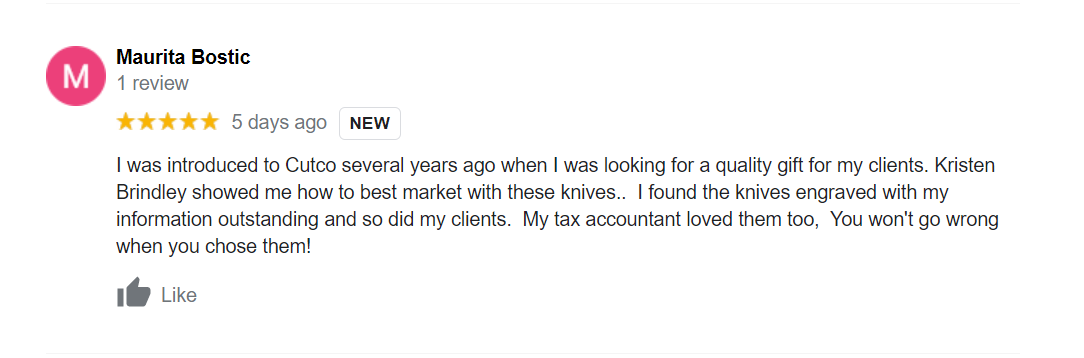
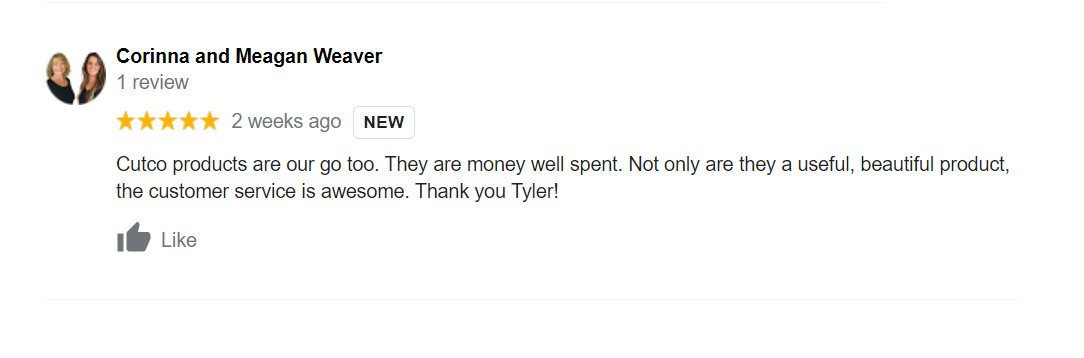
Clients Reviews
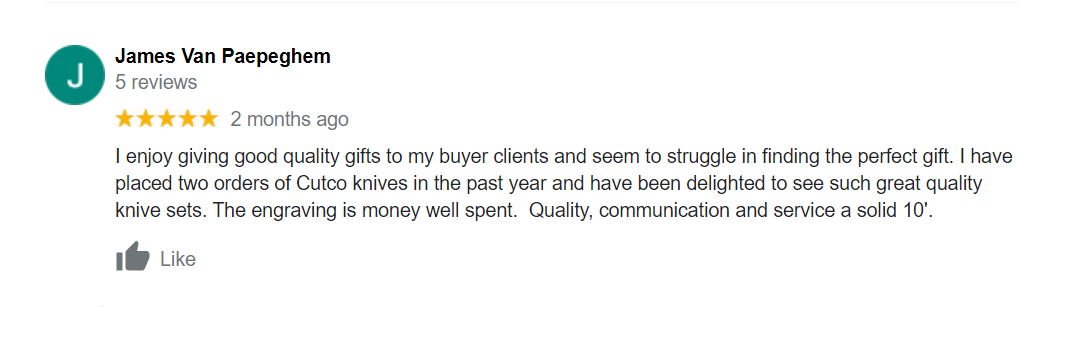
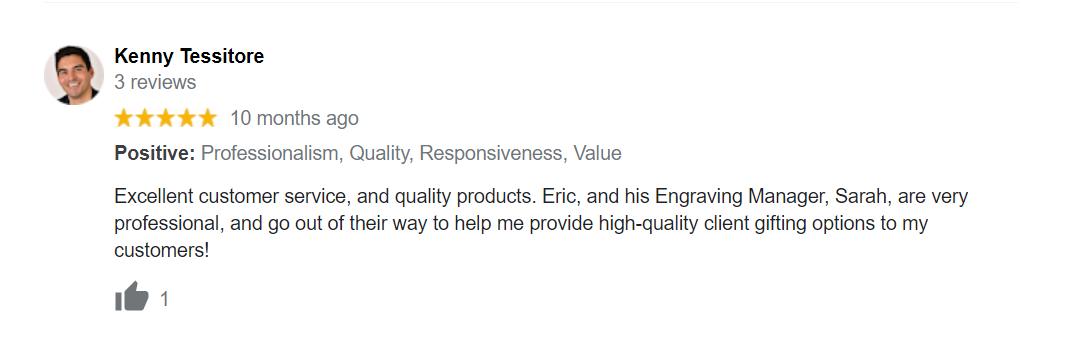


"Our mission is to revolutionize the way businesses and sales professionals connect with clients and prospects through the art of strategic gift giving."
Quick Links
Connect With Us!
- Cutting Edge Gifts
1712 Foxwood Dr.
Garner, NC 27529 - (919) 578-3696
- info@cuttingedgegift.com
© Copyright 2025 Cutting Edge Gifts. All Rights Reserved.


